
Interview
Nigeria: “For kids to be well-taught, we need to make sure the teachers are doing well”
Nigeria is facing a critical shortage of qualified teachers. To address this issue, particularly in crisis-affected areas, the NGO Plan International is taking a comprehensive approach that combines training, workplace well-being, and institutional advisory services. This initiative is supported by the Regional Teachers Initiative for Africa Facility, funded by the European Union and coordinated by Expertise France alongside its Belgian and Finnish partners.

What is the situation for teachers in northern Nigeria?
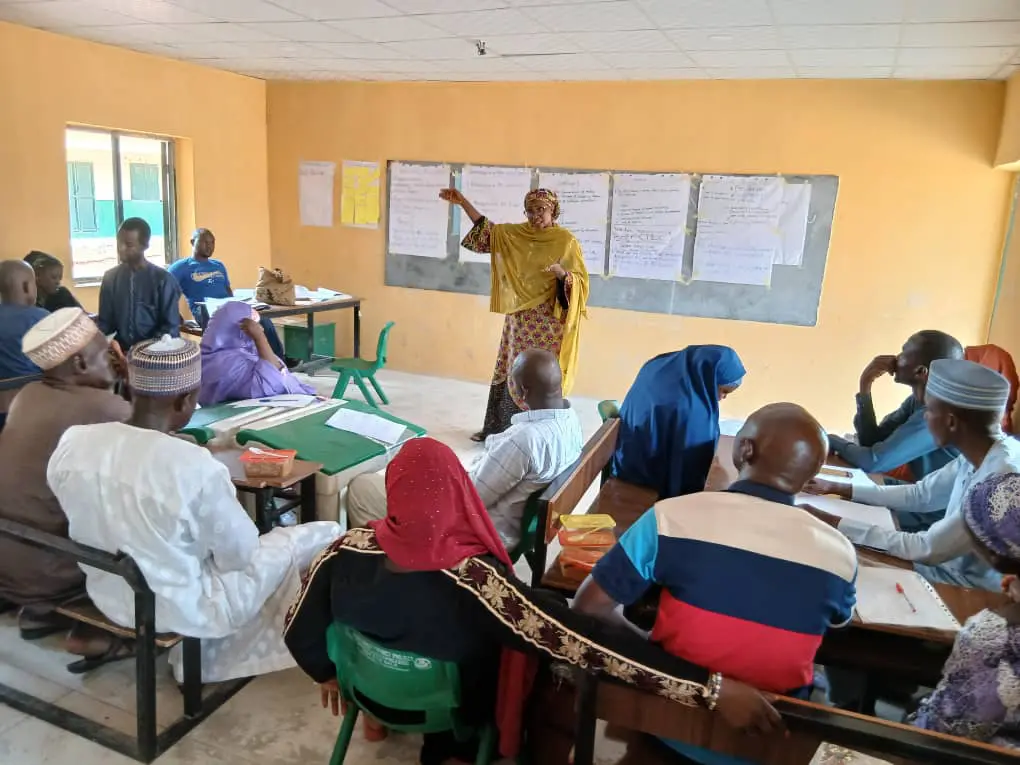
The current activities of our project are located in two Nigerian states: Adamawa, in the northeast and Sokoto in the northwest, which both suffer from instability linked to insurgency or banditry, at different scales. The challenge is ensuring children continue to learn when crises last for many years. In many cases, teachers are expected to handle each traumatic situation, just because they are adults, and to get back to the classroom as usual.
What is innovative about this program?
While some frameworks and psychosocial supports exist, most of them were either intended for the children/learners or as add-ons. However, for children to be well-taught, we need to make sure the teachers are doing well mentally. At last, we had the opportunity to focus on teachers alone! We were so excited to read the call, because it proposed to answer a need we had felt for very long. We are working on several aspects of teachers’ experience in Nigeria to better equip, support, and motivate them.
What were the key needs you identified?
We noticed that many newly recruited teachers enter their first classrooms without sufficient understanding of how the school system works or some of the relevant policies, such as the career path policy. Their pre-service training did not equip them with that. We are designing an onboarding process for teachers in partnership with the Teacher Registration Council of Nigeria and the National Union for Teachers, to help them ease into the classroom with sufficient information about the school, their career path, and relevant Nigerian education policies. One of the legacies of this project will be an onboarding package for teachers, including a combination of training sessions and resources.
Many newly recruited teachers enter their first classrooms without sufficient understanding of the career path policy
How many teachers are you reaching with your program?
We are reaching a total of 2,800 teachers in Adamawa and Sokoto. We are a small team working with local partners, but we are very focused on building local capacity, particularly as the funding climate is changing and moving towards more localization.
Do you have a chance to network with coordinators of similar projects in Africa?
Yes—the Facility organized a learning workshop for us in 2025 in Ethiopia, and another one in January 2026 in Kigali (Rwanda). It was extremely useful — I may even say, beautiful — to hear about experiences in other countries, to see how similar some of our situations were, and to discover the innovative ways in which we were creating solutions. We decided we would keep meeting online quarterly, so we would keep sharing good practices.
Would you have an example of inspiring ideas you found in other countries?
For example, in South Sudan, they created a peer group for female teachers. It made us realize that it would be very useful in Northern Nigeria, where the culture and the security situation are challenging for women. We have a female safe space within our own NGO for female staff to come together and talk about challenges, but we had not thought about setting up the same for female teachers.
Which of your own methods were found most interesting?
This year in Kigali, we talked about our peer-to-peer well-being approach for teachers’ mental well-being. In many African countries, just talking about mental health can be considered a weakness. We realized that teachers needed support on that aspect, but we wanted to avoid having them to face experts who tell them that they are not well in their head! Instead, we used Psychlops, a peer-to-peer well-being monitoring tool validated by WHO. This is administered one teacher to another, and encourages them to deal with their stress.
What can be done to improve teachers’ status in Nigeria?
Improving teachers’ status requires both strong institutions and greater social recognition of the profession. Teachers are underpaid, and not as respected as they used to be. Through the project, Plan International works with key institutions such as the National Union of Teachers and the Teachers Registration Council of Nigeria to support reforms that strengthen the teaching profession, including representation of female teachers. One example is the reform of the Professional Qualifying Examination, where the number of subjects was streamlined from twenty-five to five core competency areas. This reform is an important step toward strengthening teacher professionalization in Nigeria. Now, just like so many policies, we have to ensure proper implementation. Working with governments takes longer, but it is one of the best ways to ensure sustainability.
Interview conducted in March 2026